If you live in Miami-Dade, Broward, Palm Beach, or Hillsborough County, hurricane season isn’t something you “prepare for once.”
It’s something you have to stay ready for.
Every year, homeowners face the same stress:
Will my windows and doors hold up if flying debris hits my home?
Will my insurance company consider my home properly protected?
This is where accordion storm shutters come in.
They’re one of the most common hurricane protection choices in South Florida because they’re permanent, fast to deploy, and often more affordable than replacing every window.
But are they worth it?
Do they actually help with storm safety?
And can they help lower insurance premiums?
Let’s break it down in plain English.
What Are Accordion Storm Shutters?
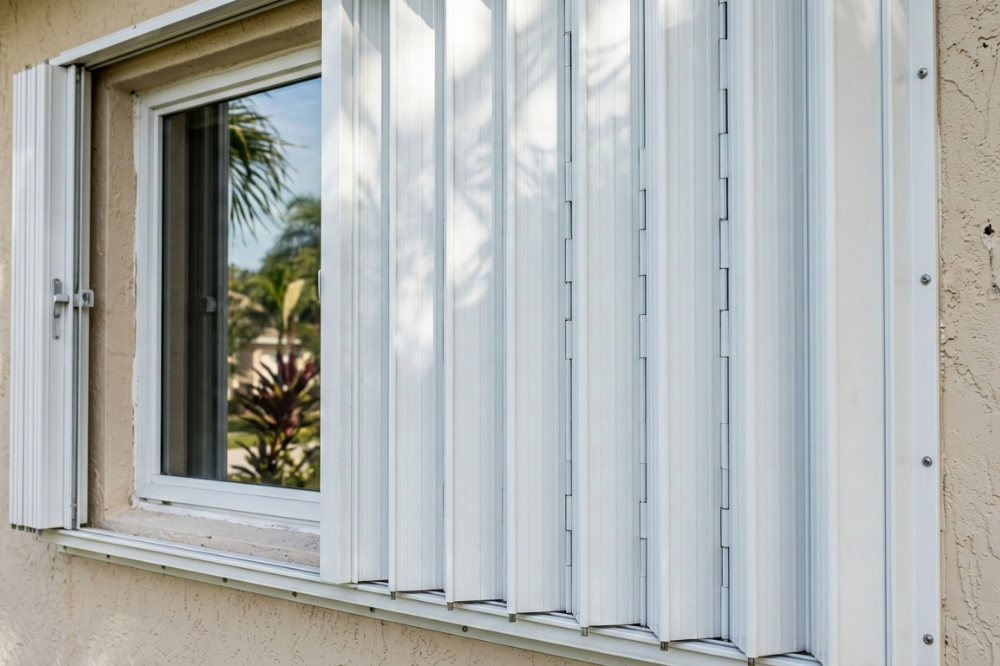
Accordion storm shutters are permanently mounted hurricane shutters made from interlocking aluminum panels.
When they are not in use, they sit folded on either side of a window or door.
When a storm is coming, you slide them closed along a track and lock them into place.
Homeowners like them because:
- They stay attached year-round (no storage needed)
- Most can be deployed by one person
- They close quickly compared to panels
- They can cover large openings like sliding glass doors
In Miami-Dade and Broward (HVHZ), accordion shutters must meet stricter wind and impact standards, so it’s important to install shutters that are code-approved for your county.
Why Opening Protection Matters During a Hurricane
Many homeowners think hurricane damage happens only when wind tears off shingles.
But window and door failure is one of the fastest ways to lose control of a storm inside your home.
When wind breaks a window or blows in a door, pressure builds inside the house.
That pressure can:
- Lift the roof
- Collapse garage doors
- Push walls outward
- Drive rain deep into the home
This is why Florida’s building standards focus heavily on “opening protection.”
If your openings are protected, your home is far more likely to stay structurally stable during high wind events.
Accordion storm shutters are designed specifically to prevent windborne debris from breaking the glass and starting that chain reaction.
Are Accordion Storm Shutters Safe?
Yes — when they are installed correctly, rated correctly, and locked correctly.
Accordion shutters create a physical shield between your glass and flying debris.
They also help resist pressure changes because they reduce the likelihood of window failure.
However, the safety benefit depends on three things:
1) They must meet Florida code
Not all shutters are equal. For South Florida, you want shutters that meet Florida Building Code and, when applicable, HVHZ standards.
2) They must cover every opening
If one window is left uncovered, it increases risk and may affect insurance credits.
3) They must be fully locked
If shutters are closed but not locked properly, they may not hold under extreme pressure.
Accordion Shutters vs Other Hurricane Protection Options
Homeowners often ask what’s “best.”
The answer depends on your home layout, budget, and how fast you need to deploy protection.
Here’s the comparison most Florida homeowners care about.
Accordion Shutters vs Panels
Panels can be cheaper upfront, but they require time, labor, and storage.
Accordion shutters win because they are:
- Always attached
- Faster to close
- Easier for one person
Accordion Shutters vs Roll-Down Shutters
Roll-down shutters are extremely convenient but usually cost more.
Accordion shutters are often the middle-ground choice:
- Strong protection
- Manual deployment
- Lower cost than motorized roll-down systems
Accordion Shutters vs Impact Windows
Impact windows are always active protection.
You don’t need to deploy anything.
But impact windows are a larger investment because you’re replacing the window system itself.
Accordion shutters can provide code-compliant protection without the full cost of a whole-home window replacement.
Many Florida homeowners choose accordion shutters because they want protection now, and upgrades later.
Do Accordion Storm Shutters Lower Insurance Premiums?
They can.
Florida insurers commonly offer wind mitigation credits when your home has verified hurricane protection.
The key is documentation.
To qualify for credits, insurers typically need a wind mitigation inspection report showing:
- Your shutters are code-approved
- They protect all openings
- They were installed properly (often with permitting evidence)
If your shutters protect only some windows, you may not qualify for the strongest opening-protection credit.
That’s why partial shutter coverage can lead to disappointment.
Homeowners think they are protected, but insurers may not give full credit because one or two windows are missing protection.
The Florida Insurance Reality in 2026
Even if your insurer doesn’t “require” shutters, Florida homeowners are dealing with:
- Rising premiums
- Stricter underwriting
- More inspections
- More non-renewals for risk-related issues
Insurance companies are placing higher value on homes that reduce storm risk.
That includes:
- Opening protection
- Wind-rated roofing
- Strong roof-to-wall connections
- Verified documentation
Accordion storm shutters can strengthen your insurance position because they demonstrate proactive mitigation.
They don’t guarantee savings.
But they help support the narrative that your home is less likely to produce a catastrophic claim.
How Accordion Storm Shutters Work During Storm Prep
Accordion shutters are popular because hurricane prep becomes simpler.
Instead of handling panels and bolts, the process usually looks like this:
- Unlock shutter
- Slide it across the window or door
- Lock it into place
- Repeat for remaining openings
This matters in real life because many homeowners don’t have a full day to prepare.
It also matters for:
- Two-story homes
- Older homeowners
- Families who need speed and simplicity
Fast deployment increases the chance you’ll actually protect your home before the storm arrives.
Common Problems We See During Inspections
A major reason homeowners miss insurance credits is not because shutters are “bad.”
It’s because shutters are installed or documented incorrectly.
Here are common issues:
- Not every opening is protected
- Shutters are not rated for the county
- Shutters were installed years ago without permits
- Locks or tracks are damaged
- Corrosion makes shutters hard to close
- Homeowners don’t have documentation for insurance
Some homes also have:
- Shutters on windows but not on sliding glass doors
- Shutters on first floor but not on second floor
- Shutters that don’t fully seal or lock properly
A hurricane safety inspection helps identify these issues before storm season, not during it.
How the Hurricane Safety Program Helps
The Hurricane Safety Program is designed to help Florida homeowners strengthen storm protection and improve their insurance position.
We help with both:
- Storm shutter inspections
- Storm shutter installation
Our process is homeowner-friendly:
Step 1: Hurricane safety inspection
We evaluate your home for vulnerabilities and opening protection gaps.
Step 2: Clear upgrade plan
If shutters are missing, outdated, or incomplete, we recommend the best path forward.
Step 3: Installation and permitting
We handle the logistics, including permits and compliance requirements.
Step 4: Documentation support
We help you gather the information your insurer typically needs when applying for mitigation credits.
In short, we handle everything.
That’s important because many homeowners don’t need “more information.”
They need a plan, a process, and a way to stay protected without guessing.
Accordion Storm Shutters in South Florida vs Hillsborough
The reason location matters is because building standards and wind exposure differ by county.
Miami-Dade and Broward
These counties are part of the High Velocity Hurricane Zone (HVHZ).
That means stricter standards for:
- Product approvals
- Wind pressure ratings
- Installation requirements
Palm Beach
Palm Beach has major coastal and inland storm risk.
Many homeowners have older homes that benefit from improved opening protection.
Hillsborough
Tampa Bay’s storm surge and wind exposure is serious.
Homeowners in Hillsborough often face:
- Insurance pressure
- New underwriting scrutiny
- Rising storm-prep urgency after recent near-misses
Accordion shutters can be a strong, practical solution in all these counties, as long as they are properly rated and installed.
Are Accordion Storm Shutters Still Worth It?
For many Florida homeowners, yes.
They remain one of the most practical hurricane protection options because they deliver:
- Fast deployment
- Strong opening protection
- Potential wind mitigation credits
- Long-term durability
- Added security benefits
They’re especially valuable if your home currently has:
- No opening protection
- Old windows
- Sliding glass doors
- A need for fast storm readiness
Take Action: Check If Your Home Qualifies
If you are not sure whether your accordion shutters:
- Protect every opening
- Meet code requirements
- Qualify for wind mitigation credits
- Need repairs or upgrades
The best next step is a hurricane safety inspection.
The Hurricane Safety Program can help you:
- Identify gaps
- Strengthen storm protection
- Prepare compliance documentation
- Improve your insurance position
Don’t wait until a storm is on the radar.