If your Florida home insurance bill has gone up in the past few years — and it almost certainly has — there’s a good chance nobody told you about one of the most powerful tools available to reduce it.
It’s called windstorm mitigation, and it’s a process that could save you hundreds of dollars a year on your homeowners insurance without switching carriers, reducing coverage, or taking on major financial risk.
For South Florida homeowners in Miami-Dade, Broward, and Palm Beach counties, windstorm mitigation isn’t just a money-saving opportunity. It’s quickly becoming something you can’t afford to ignore — especially with significant changes to the official inspection form that took effect on April 1, 2026.
Here’s what you need to know.
What Is Windstorm Mitigation?
Windstorm mitigation refers to the process of strengthening a home against wind damage — specifically the kind caused by hurricanes and tropical storms — and then documenting those features through an official inspection so your insurance company can apply the discounts you’ve earned.
The key word is documentation. Many Florida homeowners already have wind-resistant features on their homes: impact windows, a newer roof, hurricane straps connecting the roof to the walls. But if those features haven’t been formally verified through a windstorm mitigation inspection, your insurer has no way to apply the credits they’re legally required to offer.
Under Florida Statute §627.0629, insurance companies are required to provide premium discounts to homeowners who have verified wind-resistant construction features. That means if your home qualifies and you haven’t had an inspection, you may be paying more than you have to — right now, on your current policy.
What Is a Wind Mitigation Inspection?
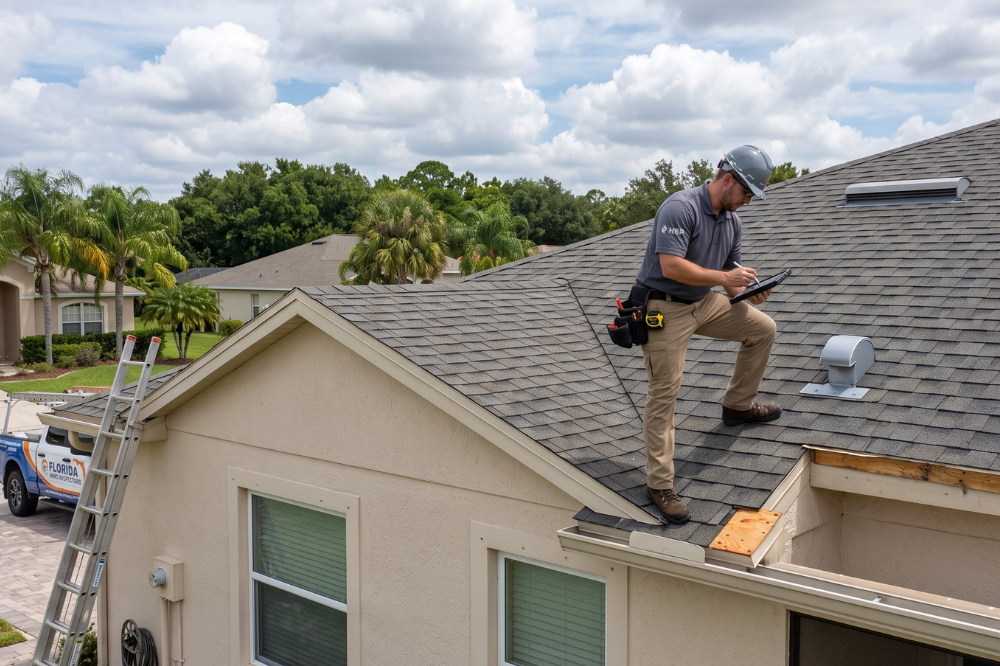
A wind mitigation inspection — also called a windstorm mitigation inspection — is a formal evaluation of your home’s ability to withstand high winds. It’s conducted by a licensed professional and documented on the Uniform Mitigation Verification Inspection Form (OIR-B1-1802), the official form recognized by all Florida insurance carriers.
The inspector examines six key areas of your home:
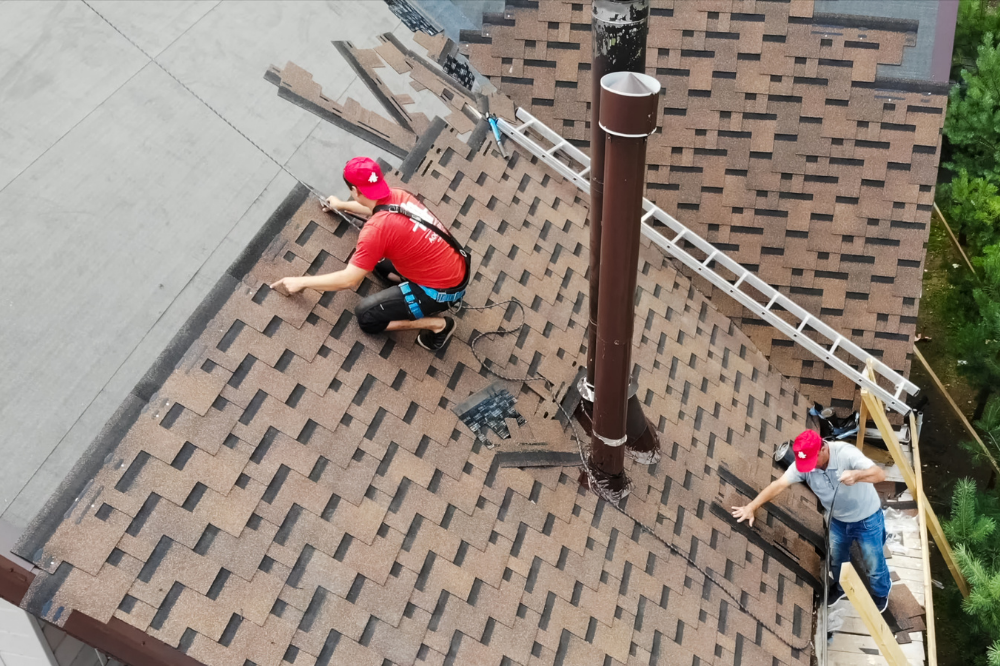
1. Roof Covering What material covers your roof, and is it rated for high-wind performance? Certain shingles, tile systems, and metal roofing qualify for credits.
2. Roof Deck Attachment How is the roof deck attached to the structure? Thicker plywood and longer, more tightly spaced nails perform significantly better in high winds and earn higher credits.
3. Roof-to-Wall Connections This is often the most impactful feature. Homes with hurricane straps or clips connecting the roof structure to the walls score much better than homes with toenail (nail-only) connections, which are common in pre-1994 construction.
4. Roof Shape / Geometry Hip roofs — sloped on all four sides — handle hurricane-force winds better than gable roofs with flat end walls. A hip or hip-combination roof typically earns more significant credits.
5. Secondary Water Resistance (SWR) A self-adhesive waterproof barrier applied under the roofing material helps prevent water intrusion if the roof covering is damaged. Homes with SWR qualify for an additional discount.
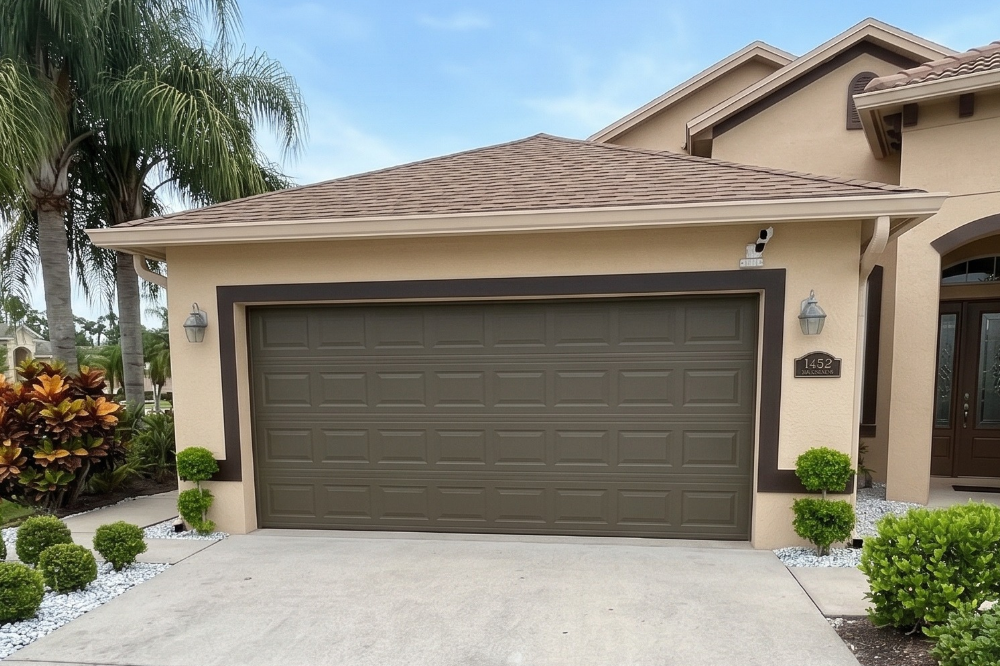
6. Opening Protection This covers windows, exterior doors, and garage doors. Homes where all openings are protected — either by impact-rated materials or approved hurricane shutters — qualify for the highest credits in this category. For South Florida homes specifically, products must meet the Miami-Dade County High-Velocity Hurricane Zone (HVHZ) standard to qualify.
The inspection typically takes 30 to 60 minutes. A licensed home inspector, general contractor, engineer, or architect can conduct it. The resulting report is valid for up to five years, after which a new inspection is required to maintain your insurance discounts.
How Much Can Windstorm Mitigation Save You?
This is the question most homeowners want answered first — and the answer depends on which features your home has and how your insurer calculates credits.
Here’s a realistic picture based on current data from the Florida Office of Insurance Regulation and verified insurer filings:
- Homeowners with several qualifying features typically save $300–$600 per year on the windstorm portion of their premium
- Homes with comprehensive wind protection — hip roof, impact windows and doors, upgraded roof deck attachment, and secondary water resistance — can see 20–30% off their total annual premium
- For South Florida homeowners already paying $4,000–$6,000 or more per year, a 20–25% discount represents $800–$1,500 in annual savings
- The inspection itself costs roughly $95–$150, meaning most homeowners recoup the cost within the first few months of savings
It’s important to understand how the math works: wind mitigation credits apply specifically to the windstorm portion of your policy, which typically makes up 30–50% of your total premium. The credits reduce that portion, not the whole bill. Even so, in South Florida — where hurricane risk drives a large share of the premium — the savings are real and recurring every year.
And because the report is valid for five years, that initial inspection investment continues paying off for the entire term.
The 2026 Update to the Wind Mitigation Form — What You Need to Know Right Now
Florida’s wind mitigation inspection form (OIR-B1-1802) underwent a significant update that took effect April 1, 2026. This is the first major revision in over a decade, driven by a 2024 Residential Wind-Loss Mitigation Study commissioned by the Florida Office of Insurance Regulation.
Here’s what changed and why it matters for homeowners:
More detailed documentation is required. The new form requires inspectors to provide more specific evidence for each feature — photos, product approval numbers, permit documentation. Inspections that were straightforward under the old form may now require additional verification.
Some features may be evaluated differently. The updated discount tables reflect more current building science and real-world hurricane performance data. Some features may qualify for higher discounts under the new form; others may be assessed under stricter criteria.
Insurance companies begin applying new credits in July 2026. There is currently a brief window between the inspection form rollout (April 2026) and when insurers are expected to begin applying credits based on the new form (July 2026). Homeowners who complete inspections now will be well-positioned when that transition happens.
Older reports may still be accepted — but check with your insurer. Reports completed before April 1, 2026 may remain valid depending on your carrier, as the inspection form is valid for up to five years unless superseded. However, with the new form now active, an updated inspection may produce more favorable results if your home has undergone upgrades since your last inspection.
The bottom line: if you’ve made any improvements to your roof, windows, or doors in the past few years — or if it’s been more than two years since your last windstorm inspection — now is the right time to schedule a new one.
What Features Qualify for the Biggest Discounts?
Not all wind-resistant features carry equal weight with insurers. Based on current OIR guidelines, the features that typically generate the most significant credits are:
Full opening protection — When every window, exterior door, and garage door on your home is protected by impact-rated products or approved storm shutters, your opening protection credit moves to the highest available tier. This is where impact windows make the most meaningful difference on your insurance discount.
Hip or hip-combination roof — Homes built after 2002 often already have this. Older homes with gable roofs receive lower credits in this category.
Hurricane straps or clips at roof-to-wall connections — These are often hidden in the attic. The type of connector (clip, single wrap, double wrap) directly affects the credit level. Many pre-1994 homes have only toenail connections, which qualify for minimal credits.
Secondary water resistance — A self-adhesive underlayment applied to the roof deck. This is one of the most overlooked features and one of the easiest to install during a roof replacement.
For homeowners who want to maximize their windstorm mitigation credits, upgrading multiple features — particularly the roof system and all openings — generates the most significant cumulative discount.
The Connection Between Windstorm Mitigation and Your Insurance Coverage
In Florida’s current insurance market, windstorm mitigation isn’t just about saving money on premiums. It’s also becoming a key factor in whether insurers will cover your home at all.
Carriers in Florida are under intense financial pressure. Over the past several years, multiple private insurers exited the state or became insolvent, leaving hundreds of thousands of homeowners scrambling for coverage. The insurers that remain are applying stricter underwriting standards — and homes without documented wind-resistant features are increasingly being flagged at renewal.
Here’s what that means practically:
- Homes with older roofs, single-pane windows, and no opening protection are being non-renewed or placed into Citizens Property Insurance at higher rates
- A wind mitigation inspection that reveals deficiencies is not a failure — it’s a roadmap. It tells you exactly what needs to be upgraded to qualify for discounts and maintain coverage
- Homes with completed upgrades and a current windstorm mitigation report are more attractive to insurers and, for homeowners selling their property, to buyers as well
Simply put, a current wind mitigation report is one of the most valuable documents a Florida homeowner can have.
How the Hurricane Safety Program Handles Windstorm Mitigation
For many homeowners, the challenge isn’t understanding windstorm mitigation — it’s navigating all the moving parts: finding a licensed inspector, understanding what the report says, knowing which upgrades to prioritize, getting them permitted and installed correctly, and then making sure the documentation gets submitted to the insurer properly.
That’s exactly what the Hurricane Safety Program (HSP) is designed to handle.
HSP works with homeowners throughout Miami-Dade, Broward, and Palm Beach counties to complete the entire windstorm mitigation process from start to finish:
Free Home Assessment An HSP specialist evaluates your home’s current wind protection features — roof condition and type, opening protection, roof-to-wall connections — and identifies what upgrades would generate the most meaningful insurance credits for your specific situation.
Inspection Coordination HSP coordinates your licensed windstorm mitigation inspection and helps you understand exactly what the inspector will be looking for — so there are no surprises in the report.
Certified Upgrades — Roof, Windows, and Doors If your inspection reveals that your openings, roof deck, or connections need upgrading, HSP handles the installation using Florida Product Approved materials that meet insurer documentation standards. All work is fully permitted.
Post-Upgrade Wind Mitigation Report After your upgrades are completed, HSP coordinates a new windstorm mitigation inspection under the updated OIR-B1-1802 form, ensuring your improvements are fully documented in the format insurers require.
Insurance Submission Support HSP helps you submit your completed report to your insurer so your discounts are applied correctly at your next renewal — not a year from now.
The goal is simple: take a confusing, multi-step process and make it straightforward for homeowners who have enough to manage without becoming experts in insurance form requirements.
Is Your Home Ready for Hurricane Season — and for Your Next Renewal?
Hurricane season begins June 1. Insurance renewal cycles don’t wait. And with Florida’s wind mitigation inspection form now updated for the first time in over a decade, the window to get ahead of these changes is right now.
If your home is more than 15 years old — or if you haven’t had a windstorm mitigation inspection in the past two years — there’s a good chance you’re either leaving insurance savings unclaimed or carrying risks you don’t know about yet.
The Hurricane Safety Program offers a free home assessment for homeowners in Miami-Dade, Broward, and Palm Beach counties. We’ll evaluate your home’s current wind protection, explain exactly what your windstorm mitigation report would show, and walk you through your options — with no obligation.
Check If Your Home Qualifies — Schedule a Free Assessment No pressure. No jargon. Just honest answers about your home and your insurance.
Hurricane Safety Program serves homeowners throughout Miami-Dade, Broward, and Palm Beach County. All upgrades are installed by licensed, insured contractors in full compliance with Florida Building Code, local permit requirements, and the updated OIR-B1-1802 windstorm mitigation inspection standards.