Hurricane season officially began June 1, 2026. If you own a home in South Florida, that date isn’t just a calendar entry — it’s the starting line for a six-month window that will test every roof, window, and door between Miami and Tampa.
This year, forecasters are calling for a below-average Atlantic season. And that’s exactly the kind of forecast that gets Florida homeowners hurt.
Here’s what the 2026 outlook actually means for you, what’s changed in the insurance market, and what steps matter most before a storm has a name.
What the 2026 Hurricane Season Forecast Actually Says
On May 21, 2026, NOAA released its official outlook for the 2026 Atlantic hurricane season. The agency is predicting a below-normal season driven largely by an emerging El Niño climate pattern, which tends to increase upper-level wind shear over the Atlantic and suppress tropical development.
The headline numbers:
- 8 to 14 named storms (winds of 39 mph or higher)
- 3 to 6 hurricanes (winds of 74 mph or higher)
- 1 to 3 major hurricanes (Category 3, 4, or 5 — winds above 111 mph)
- 55% chance of a below-normal season, 35% chance of near-normal, 10% chance of above-normal
For context, an average Atlantic season produces about 14 named storms, 7 hurricanes, and 3 major hurricanes. Colorado State University’s April forecast aligned closely with NOAA, predicting 13 named storms, 6 hurricanes, and 2 major hurricanes.
NOAA’s own director, Ken Graham, put it plainly: “Although El Niño’s impact in the Atlantic Basin can often suppress hurricane development, there is still uncertainty in how each season will unfold. That is why it’s essential to review your hurricane preparedness plan now.”
That message is aimed directly at homeowners who hear “below average” and exhale.
Why a Quieter Forecast Doesn’t Mean a Quiet Risk
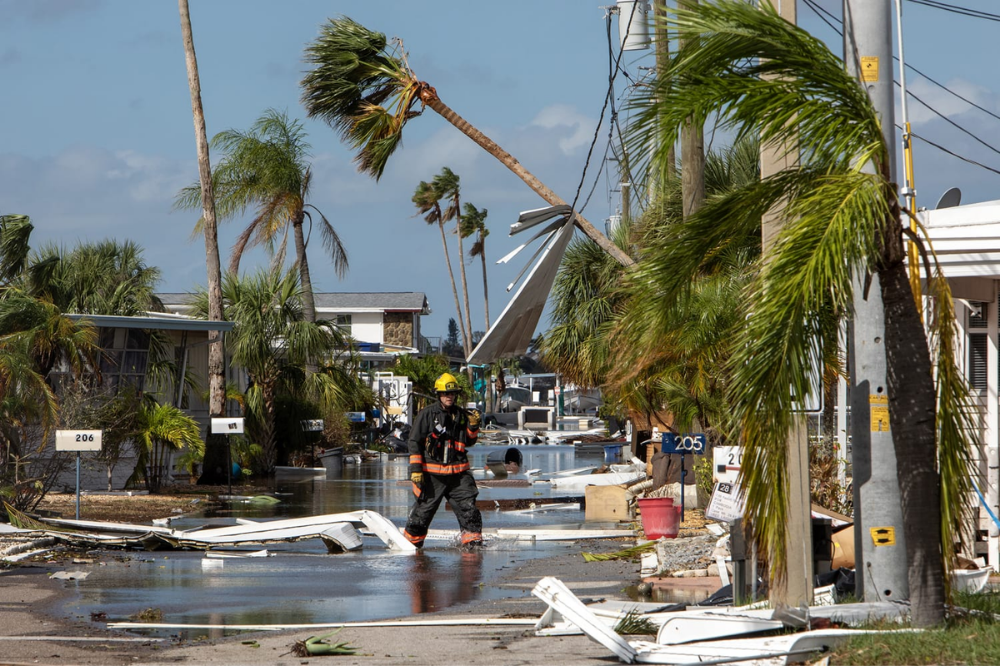
Every Florida homeowner who has lived through a named storm — even a small one — understands this: a below-average season is not a safe season. It takes exactly one storm making landfall in your county to change everything.
A few things worth keeping in mind about the 2026 forecast:
Forecasts measure volume, not location. Seasonal predictions count total activity across the entire Atlantic basin. They cannot predict whether any of those storms will make landfall in South Florida, Tampa Bay, or anywhere else. A season with six named storms that includes one direct hit on Miami is more damaging than a season with 18 storms that all miss the coast.
El Niño suppresses the Atlantic — but not the Gulf. El Niño conditions reduce activity in the Atlantic while warming Pacific waters. Gulf of Mexico storms can still develop and intensify rapidly, sometimes in a matter of hours, giving coastal Florida communities minimal warning time.
Florida homes are still carrying risk from the 2024 season. Hurricanes Helene and Milton in 2024 caused widespread damage and generated a claims backlog that stretched well into 2025. Homes that were patched rather than properly repaired — especially roofs — head into 2026 in compromised condition.
The insurance market doesn’t wait for the forecast. Insurers are not adjusting your renewal premium based on whether NOAA predicts a quiet season. They’re looking at your roof age, your window protection, your inspection history, and your claims record. A below-normal forecast changes nothing about your coverage risk.
What’s Changed in Florida’s Insurance Market for 2026
The good news first: Florida’s insurance market is showing genuine signs of stabilization in 2026. Citizens Property Insurance, the state’s insurer of last resort, is implementing an average 8.7% rate reduction statewide, with larger reductions in hard-hit areas — Broward County homeowners are seeing reductions of up to 14.1%. New private carriers have entered the market, giving homeowners more options than they had in 2023 and 2024.
But stabilization is not the same as relief — and it comes with conditions that many South Florida homeowners don’t fully understand yet.
Private carriers are still underwriting strictly. The insurers re-entering Florida are doing so with tighter eligibility requirements, not looser ones. Homes with roofs older than 15 to 20 years, unprotected openings, or a recent claims history are still being declined or non-renewed by private carriers, pushing homeowners back toward Citizens or the surplus lines market at significantly higher rates.
Citizens is tightening its own rules. As part of the ongoing depopulation effort, Citizens is actively moving policies to private carriers where coverage is available. Homeowners who have been comfortably insured with Citizens may find themselves shifted to a private policy with different terms — including different deductible structures and inspection requirements.
Wind mitigation documentation is increasingly expected. Under the updated OIR-B1-1802 wind mitigation inspection form that took effect April 1, 2026, insurers are applying new discount tables to homeowner policies. Homes without a current inspection report — especially those that have had upgrades in the last few years — may be missing credits they’ve already earned.
Hurricane deductibles apply to named storms. Most Florida homeowners policies include a separate hurricane deductible — typically 2% to 5% of the insured value of the home — that activates the moment a storm is officially named by the National Hurricane Center. On a home insured for $400,000, a 2% hurricane deductible means a $8,000 out-of-pocket expense before your coverage kicks in, even on a relatively minor storm.
The homeowners most exposed right now are the ones who haven’t revisited their policy, their home’s condition, or their wind mitigation documentation since before 2024.
The 60-Day Window: Why Right Now Is the Time to Act
Peak hurricane season in the Atlantic runs from mid-August through mid-October, with September 10 historically the most active single date. That means the window between now and peak threat is roughly 60 to 75 days.
That’s enough time to:
- Schedule and complete a wind mitigation inspection
- Get a roof assessment and address any structural concerns
- Replace aging windows or doors that don’t meet current standards
- Document your home’s current condition before any storm activity begins
- Submit an updated inspection report to your insurer before your next renewal cycle
It is not enough time once a storm is in the Gulf. By the time a named storm is two days from Florida, contractor schedules are locked, permit offices are overwhelmed, and your insurance policy terms are frozen in place.
The homeowners who benefit most from their coverage after a storm are the ones who prepared before it had a name.
What a Wind Mitigation Inspection Does for You Right Now
If there’s one step that costs the least and delivers the most return before hurricane season peaks, it’s a wind mitigation inspection.
An inspection conducted by a licensed professional evaluates six key features of your home — roof covering, roof deck attachment, roof-to-wall connections, roof shape, secondary water resistance, and opening protection — and documents them on the official OIR-B1-1802 form. That report goes directly to your insurer, which is then legally required under Florida Statute §627.0629 to apply wind mitigation premium discounts based on the features your home has.
What you can realistically expect:
- Homes with several qualifying features typically see $300 to $600 per year in premium savings
- Homes with full opening protection (impact windows, impact doors, protected garage door) and a hip roof or upgraded roof system can see 20 to 30% off the windstorm portion of their premium
- For South Florida homeowners already paying $4,000 to $7,000 per year in insurance, that represents $800 to $2,100 in annual savings
- The inspection typically costs $95 to $150 — most homeowners recoup that in the first two to three months
The 2026 form update means inspections conducted now reflect the latest documentation standards, positioning your home correctly for the new discount tables insurers will apply starting July 2026.
The Home Upgrades That Matter Most Before Peak Season
If your home needs upgrades — not just an inspection — the following priorities give you the best combination of structural protection and insurance benefit:
1. Your Roof A roof over 15 years old that has never been assessed for hurricane strap connections, deck attachment quality, and secondary water resistance is your home’s biggest vulnerability — structurally and with your insurer. A full roof replacement with upgraded attachment specs, secondary water resistance membrane, and a post-installation wind mitigation inspection can unlock the full range of roof-related insurance credits while significantly reducing storm risk.
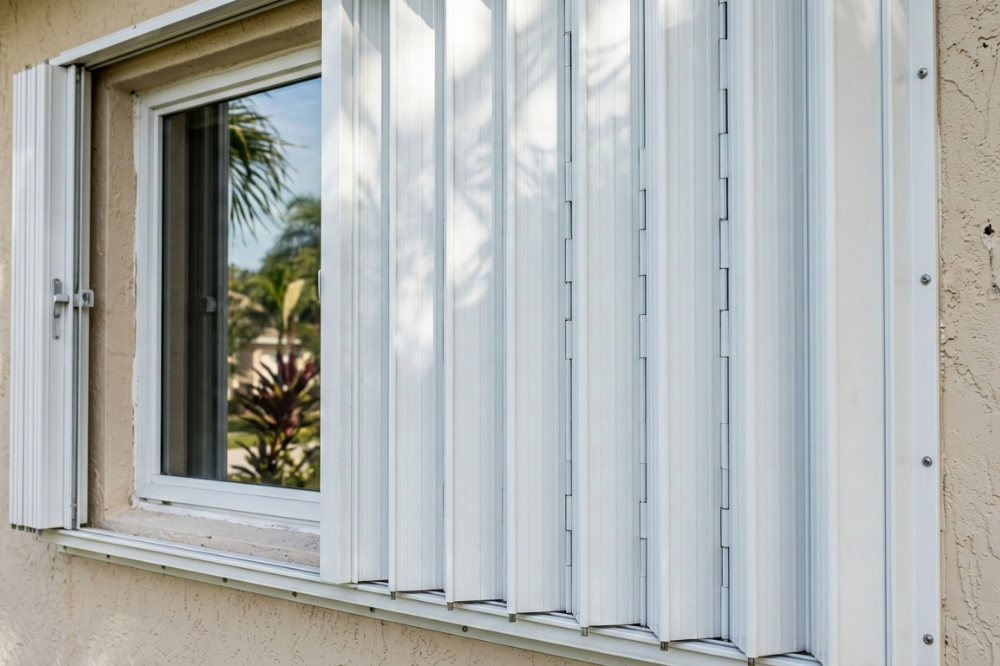
2. Impact Windows Single-pane aluminum windows found in most pre-2000 South Florida homes are not rated for hurricane-force wind pressure or debris. Impact windows — constructed with a laminated glass panel and a heavy-duty frame — remain in place even when cracked, preventing the interior pressurization that accelerates roof failure. They also push your opening protection credit to a higher tier on the wind mitigation form.
3. Impact Doors and Garage Doors A home with impact windows but a standard entry door or an unreinforced garage door doesn’t qualify for full opening protection credits. All openings must be protected for the top credit tier. Impact entry doors and HVHZ-rated garage door upgrades complete that picture.
How the Hurricane Safety Program Helps You Get There
For most South Florida homeowners, the obstacle isn’t knowing what needs to be done — it’s navigating permits, contractors, inspection coordination, and insurance paperwork while managing everything else in their lives.
The Hurricane Safety Program (HSP) handles the full process for homeowners in Miami-Dade, Broward, Palm Beach, and Tampa counties:
Free Home Assessment — An HSP specialist evaluates your roof, windows, and doors, identifies the upgrades that generate the most insurance benefit for your specific home, and explains exactly what a wind mitigation inspection would show you today.
$0 Down, No Credit Check Financing — HSP connects homeowners with financing options that require no upfront costs and no credit check to qualify. Homeowners who meet income and property eligibility requirements may also qualify for the My Safe Florida Home program, which provides up to $10,000 in grant funding for impact window and door installations.
Fully Permitted Installation — All upgrades are installed by licensed, insured contractors using Florida Product Approved materials, in full compliance with the Florida Building Code and local permit requirements.
Wind Mitigation Inspection and Insurance Submission — After upgrades are completed, HSP coordinates a wind mitigation inspection using the 2026 OIR-B1-1802 form and supports you in submitting the report to your insurer so discounts are applied correctly at your next renewal.
The goal is simple: get your home protected and documented before peak season arrives — without making the process more complicated than it has to be.
Don’t Wait for a Storm to Have a Name
The 2026 hurricane season is four days old. Peak season is 75 days away. The steps that protect your home, reduce your insurance costs, and keep your policy secure can realistically be completed within that window — if you start now.
A below-average forecast is not a reason to wait. It’s a reason to use the time you have.
The Hurricane Safety Program offers a free home assessment for homeowners in Miami-Dade, Broward, Palm Beach, and Tampa counties. No obligation. No pressure. Just an honest evaluation of where your home stands heading into 2026 hurricane season.
→ Check If Your Home Qualifies
Or call us at +1 (888) 980-8815 to speak with our team today.
Hurricane Safety Program serves homeowners throughout Miami-Dade, Broward, Palm Beach, and Tampa counties. All upgrades are installed by licensed, insured contractors in full compliance with Florida Building Code and the updated 2026 OIR-B1-1802 windstorm mitigation inspection standards.