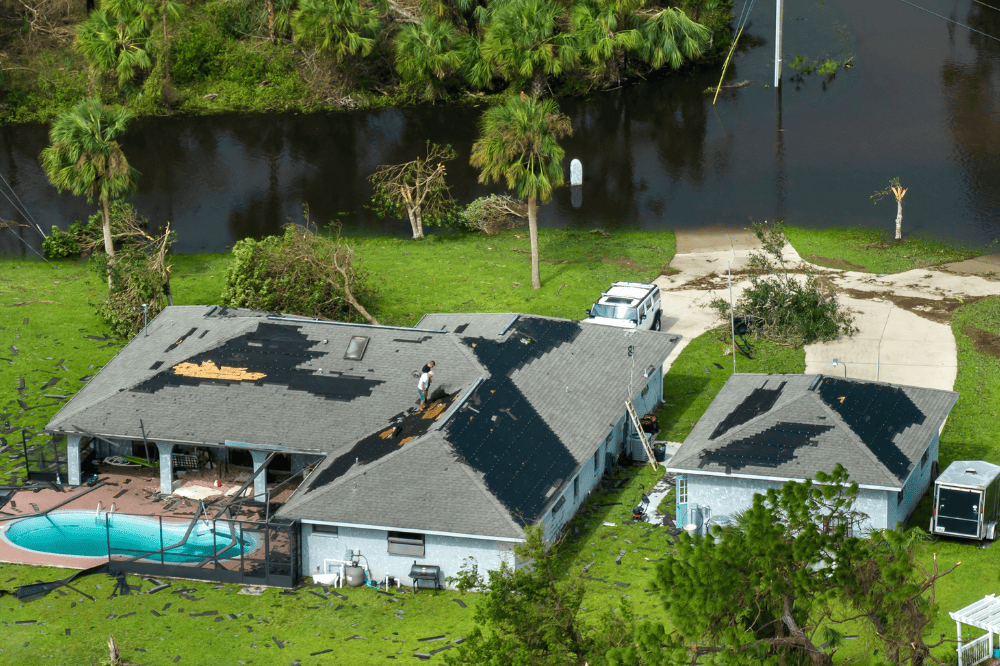
If you’ve been watching your homeowners insurance premium climb every year — or if you’ve received a letter from your insurer questioning the condition of your roof or windows — you already know that storm safety in Florida isn’t just about surviving the next hurricane. It’s about keeping your home insured, affordable, and compliant.
With the 2026 hurricane season now underway and forecasters predicting an active stretch through October, South Florida homeowners are asking a practical question: What storm safety solutions actually make a difference?
This guide breaks down the options — what they do, how they’re evaluated by insurers, and how the Hurricane Safety Program (HSP) helps homeowners get it done with no upfront costs.
Why Storm Safety Is an Insurance Issue, Not Just a Safety Issue
Most Florida homeowners think of hurricane protection as something you do for the storm — tape the windows, buy some shutters, hope for the best.
But insurers see it differently. They look at your home’s structural features year-round, and they assign your premium based on how well your home is built to withstand wind damage. Homes with verified storm safety upgrades — impact windows, reinforced roofing, protected doors — earn mandatory discounts under Florida Statute §627.0629, which requires insurers to file and offer wind mitigation credits to qualifying homeowners.
That means storm safety solutions aren’t just about physical protection. They directly affect:
- Your insurance premium — sometimes by hundreds of dollars per year
- Your insurability — insurers are increasingly non-renewing policies on homes with older roofs or unprotected openings
- Your compliance — the updated wind mitigation inspection form (OIR-B1-1802), revised April 1, 2026, requires more detailed documentation of your home’s protective features
If your home hasn’t been evaluated under the new form, you may be leaving insurance discounts on the table — or at risk of losing coverage altogether.
The Four Storm Safety Solutions That Matter Most
1. Impact Windows
Impact windows are the single highest-value upgrade most South Florida homeowners can make. Here’s why: once a window fails during a hurricane, wind enters the home and creates internal pressure that pushes outward on walls and can lift the roof. Impact windows prevent that chain reaction.
They’re constructed with two layers of laminated glass bonded by a polyvinyl butyral (PVB) interlayer. If the glass cracks under impact, the interlayer holds the pieces in place — the window stays sealed, and your home stays protected.
From an insurance standpoint, full opening protection — every window, exterior door, and garage door covered — generates the largest single discount category on most Florida policies. Homes with all openings protected by impact-rated products can see significant reductions in the wind portion of their premium.
If you’re in Miami-Dade or Broward County, impact windows must carry HVHZ (High-Velocity Hurricane Zone) approval — the strictest certification standard in the country. HSP only installs HVHZ-rated products in South Florida.
2. Impact Doors and Garage Doors
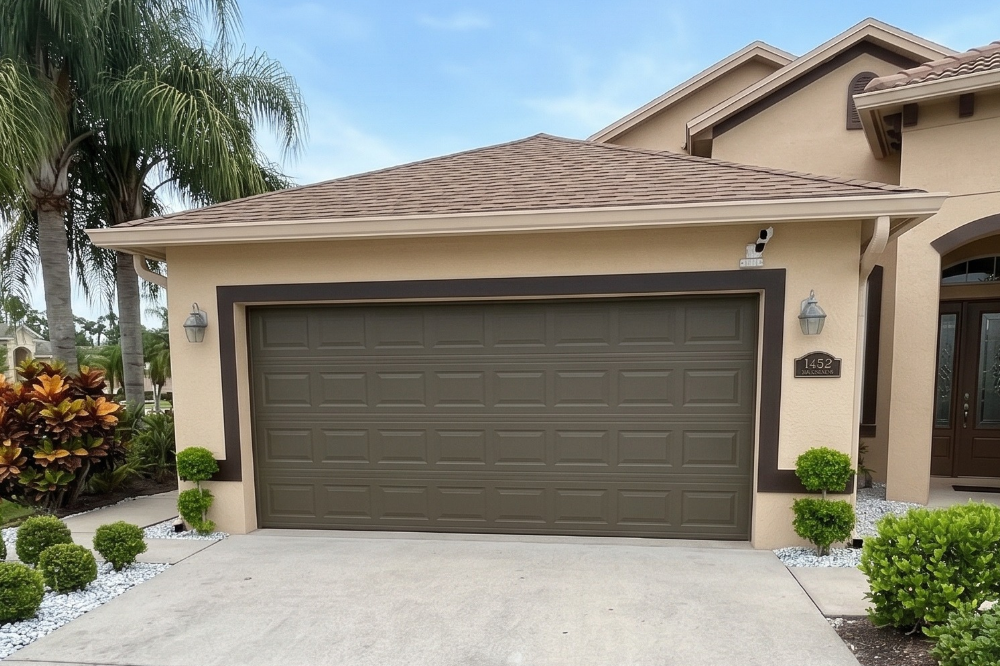
Doors are the most overlooked vulnerability in hurricane protection. A standard front door or sliding glass door can fail at wind speeds well below what a major hurricane produces. Garage doors are particularly vulnerable — when a garage door blows in, the entire structure of the home is exposed to wind pressure.
Impact-rated entry doors and garage doors use the same laminated glass and reinforced frame technology as impact windows. They’re tested to large-missile and small-missile impact standards under Florida Building Code requirements.
For insurance purposes, protecting every exterior opening — including doors — is what triggers full opening protection credits. A home where only the windows are protected but the front door isn’t may still qualify for partial credits, but full protection earns maximum discounts.
3. Storm-Resistant Roofing
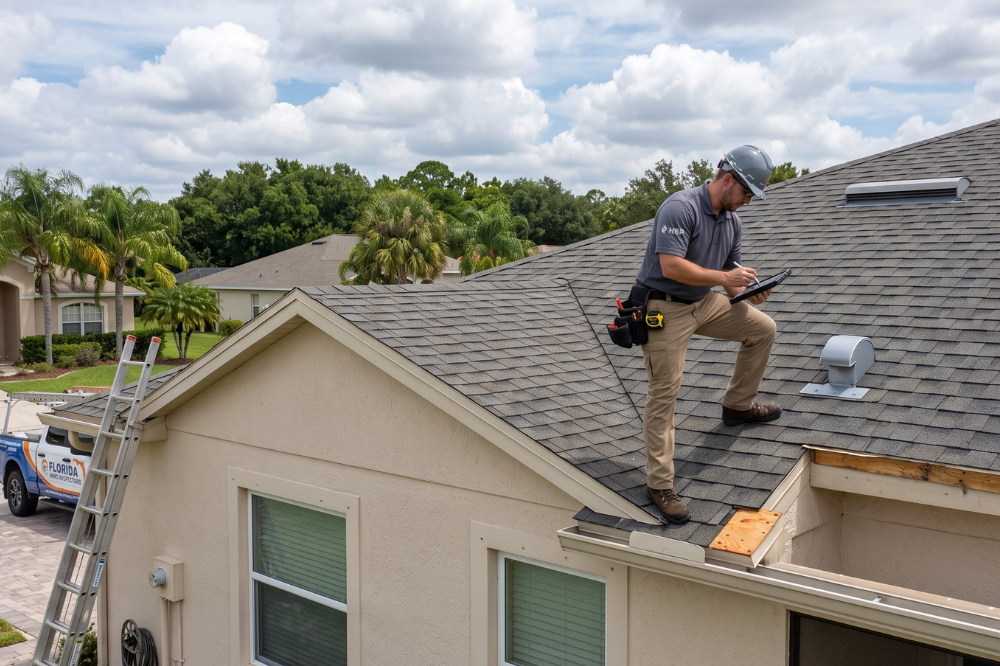
Your roof is your home’s first line of defense against a hurricane. The wind doesn’t just push on the roof from the outside — it creates uplift pressure that pulls the roof away from the walls. That’s why roof-to-wall connections matter as much as the roofing material itself.
The key features insurers look for on the wind mitigation inspection form include:
- Roof covering — Florida Building Code-compliant shingles, tiles, or metal
- Roof deck attachment — how well the decking is secured to the rafters
- Roof-to-wall connections — hurricane straps or clips that tie the roof structure to the exterior walls
- Roof shape — hip roofs (sloped on all four sides) outperform gable roofs in high winds and earn better insurance rates
- Secondary water resistance (SWR) — a sealed layer under the roofing material that prevents water intrusion if the outer covering is damaged
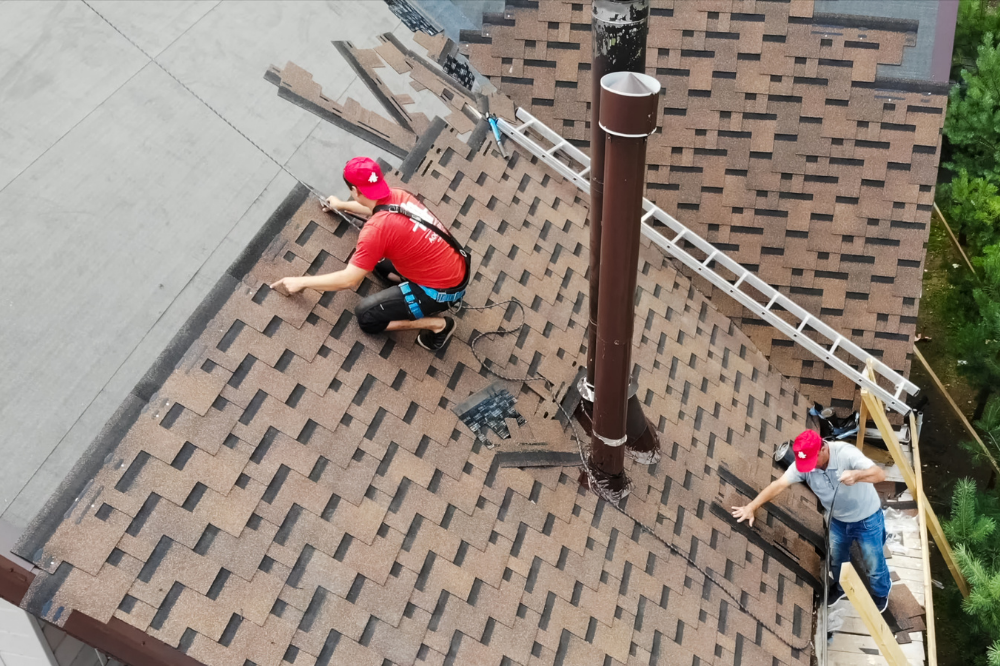
If your roof is 15 or more years old, there’s a good chance it was built before current code standards and doesn’t have the features that generate maximum wind mitigation credits. A roof replacement with today’s materials and installation standards can meaningfully change your inspection score.
4. Structural Reinforcement
Beyond the visible upgrades, the wind mitigation inspection also evaluates your home’s structural integrity — specifically whether there’s a continuous load path from the roof to the foundation. Hurricane straps, reinforced wall-to-foundation connections, and code-compliant framing all play a role.
This is especially relevant for homes built before 2002, when Florida significantly strengthened its building codes following Hurricane Andrew. Older homes often have weaker connections that aren’t obvious from the outside but can make a major difference in how the home performs — and how it’s rated by your insurer.
What Florida’s Updated Wind Mitigation Form Means for You
On April 1, 2026, Florida’s Office of Insurance Regulation updated the OIR-B1-1802 wind mitigation inspection form for the first time in over a decade. The update requires more specific documentation — photos, product approval numbers, permit records — for each protective feature on your home.
Insurance companies are expected to begin applying credits based on the new form starting in July 2026. That creates a narrow window between now and mid-summer for homeowners to get inspected, document their upgrades, and position their policy for the best possible credits under the new standards.
If you’ve had a wind mitigation inspection in the past and your upgrades haven’t changed, a re-inspection under the new form may still be worthwhile — particularly if you’ve had any roof, window, or door work done in recent years.
What About the My Safe Florida Home Program?
The My Safe Florida Home (MSFH) program offers grants of up to $10,000 to help eligible homeowners fund hurricane protection improvements. It’s a valuable resource — but it comes with income restrictions, a matching requirement for most applicants, and a waitlist that has grown significantly as program demand has increased.
For homeowners who need upgrades now — especially with peak hurricane season approaching — waiting on a grant cycle may not be practical.
How the Hurricane Safety Program Helps
The Hurricane Safety Program (HSP) was built specifically for Florida homeowners navigating this situation. HSP coordinates impact window installation, impact door replacement, and wind-resistant roofing upgrades across Miami-Dade, Broward, Palm Beach, and Tampa counties — and handles the entire process from inspection to permit to installation.
What makes HSP different:
- $0 upfront cost — no payment required to start, with no payments due until November 2026
- No income or credit restrictions — eligibility is based on your home, not your financial profile
- Permit and inspection coordination — HSP manages the paperwork, municipal permits, and post-installation inspections
- HVHZ-compliant products — every installation meets Florida Building Code requirements for high-velocity hurricane zones
- Insurance documentation support — HSP can help ensure your upgrades are properly documented for your wind mitigation inspection
This is the practical alternative for homeowners who want to move forward now rather than wait on a grant process.
The Right Time to Act Is Before the Storm
Storm safety solutions only work if they’re in place before the hurricane arrives. Lead times for impact window and door installation in South Florida typically run several weeks once permits are pulled — and permit timelines in Miami-Dade and Broward can add additional time depending on the municipality.
Homeowners who start the process now are most likely to be fully protected before peak season hits in August and September.
Check If Your Home Qualifies
If your home has older windows, an aging roof, or standard entry doors — and you’re paying more than you should for homeowners insurance — HSP can help you understand your options.
Check If Your Home Qualifies →
Or call us at +1(888) 980-8815 to speak with someone on our team.