Florida’s insurance market finally has some good news in it. Citizens Property Insurance approved an average statewide rate decrease for 2026 — the largest in its history — with even deeper cuts in Miami-Dade and Broward, and dozens of private carriers have filed for reductions instead of increases. Meanwhile, NOAA has lowered its 2026 hurricane season outlook to below-normal activity.
Two pieces of good news, and both of them tend to produce the same reaction: maybe I don’t need to worry about this right now.
That’s where the impact window myths do the most damage. Not because homeowners are careless, but because the information floating around about impact windows and security doors is a mix of outdated advice, sales-floor shorthand, and genuine misunderstanding of how Florida’s inspection and credit system works. A quiet season doesn’t change what a single Category 2 storm does to an unprotected opening, and a lower base rate doesn’t apply the wind mitigation credits you may already qualify for.
Below are the eight claims we hear most often from homeowners across Miami-Dade, Broward, Palm Beach, and Tampa Bay — and what’s actually true.
Myth 1: “Hurricane-proof windows can’t break”
The truth: Nothing installed on a house is hurricane-proof. The correct term is impact-rated, and the distinction matters.
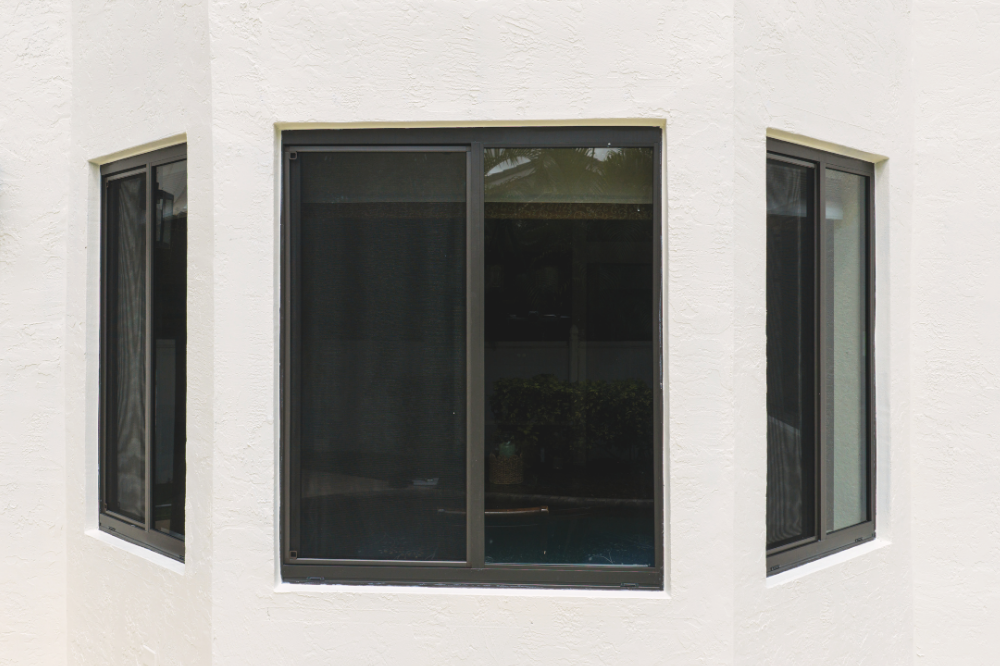
Impact-rated glass is laminated: two panes bonded to a plastic interlayer, similar in principle to a car windshield. Under a debris strike, the outer pane can absolutely crack. What it does not do is fall out of the frame. The interlayer holds the fragments together and the reinforced frame holds the assembly in the opening.
That’s the entire point. A window that spiderwebs but stays sealed has done its job, because the real danger during a hurricane isn’t the broken glass — it’s what happens the moment the building envelope opens. Wind enters, interior pressure spikes, and that pressure pushes upward and outward against the roof deck. Most catastrophic residential wind failures start with one failed opening, not with the roof itself.
So expect cosmetic damage in a severe storm. Expect the envelope to hold.
Myth 2: “My windows are thick and double-paned, so they’re impact windows”
The truth: Double-pane and impact-rated are two unrelated things.
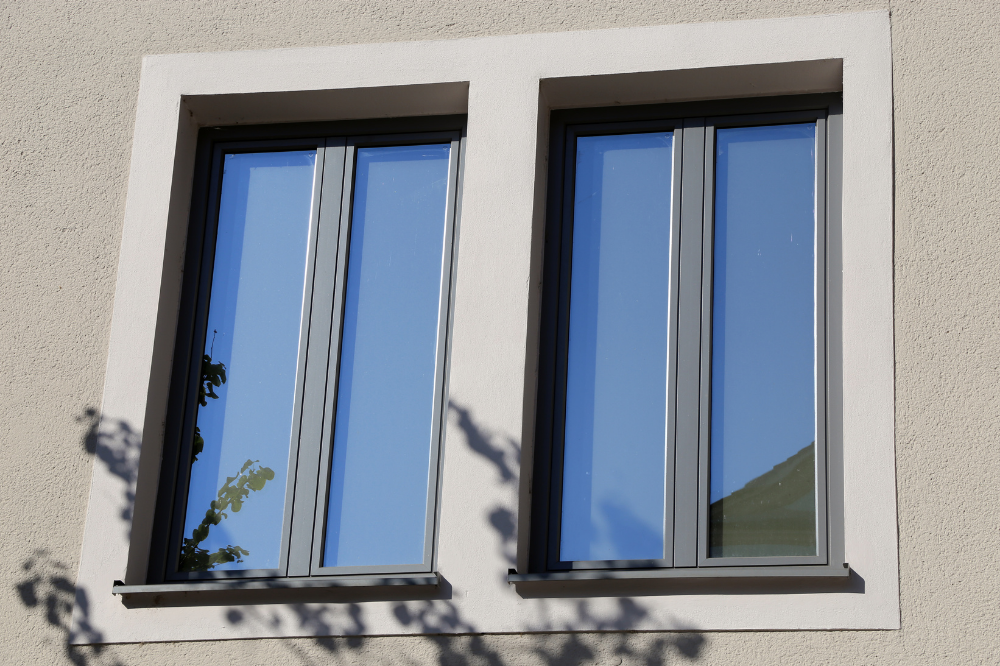
Double-pane (insulated) glass is an energy efficiency product — two panes with an air or argon gap between them. It’s built to slow heat transfer, not to stop a two-by-four traveling at 34 miles per hour. Plenty of Florida homes have newer-looking, heavy, double-pane windows that carry no impact rating at all.
An inspector isn’t guessing about this. They look for a permanent etching in the corner of the glass showing the manufacturer and the applicable standard, and they check the product approval — a Miami-Dade Notice of Acceptance (NOA) in the High-Velocity Hurricane Zone, or a Florida Product Approval (FL#) elsewhere in the state. Stickers don’t count, because stickers come off. Etchings don’t.
If you can’t find an etching and you have no product approval paperwork, assume you don’t have impact windows until an inspection tells you otherwise.
Myth 3: “A security door is the same as an impact door”
The truth: This is one of the most expensive mix-ups in the category, and it comes down to a vocabulary problem.
A security door is designed to resist a person — a heavier slab, a reinforced strike plate, a better deadbolt, sometimes a steel screen. That’s a burglary deterrent. An impact-rated door is designed to resist wind pressure and flying debris, and it is certified as a complete system: the slab, the glass, the frame, the hinges, the lock hardware, the threshold, and the specific anchoring pattern used to fasten it to the wall.
Swap out one component and the system is no longer the tested system. Install an approved door with the wrong fasteners or into an unprepared opening, and it can fail inspection even though the door itself is impact-rated.
The practical takeaway: solid and heavy tells you nothing. Documentation tells you everything. Ask for the NOA or FL# for the exact configuration installed at your house — and note that most impact-rated doors deliver serious break-in resistance as a side benefit, so you’re generally not giving up security by choosing the storm-rated product.
Myth 4: “Installing impact windows automatically lowers my insurance bill”
The truth: The upgrade qualifies you. The paperwork gets you paid.
Under Florida Statute §627.0629, every residential property insurer in the state has to offer premium discounts for verified wind-resistant features. The operative word is verified. Verification happens through a wind mitigation inspection documented on the state’s standardized form, OIR-B1-1802 — a form that was revised effective April 1, 2026, with carriers now applying discount tables based on the updated version.
No inspection, no updated form on file, no credit. We regularly meet homeowners who installed impact windows two or three years ago, never had a new wind mitigation inspection performed, and have been paying an unprotected-opening rate ever since.
Pull your declarations page and look at which credits are listed. If your last wind mitigation report predates your upgrades, that’s a gap worth closing.
Myth 5: “Doing the windows first will get me most of the discount”
The truth: Opening protection is scored on an all-or-nothing basis, and the garage door is usually the piece that breaks it.
For the opening protection credit, an inspector evaluates every glazed and non-glazed opening in the home — windows, entry doors, sliders, skylights, and the garage door. If one opening is unprotected, the home typically doesn’t qualify for the full credit regardless of how much you spent on the rest.
This catches homeowners constantly. Ten impact windows installed, one original garage door left in place, and the credit that justified the project never materializes. On many Florida homes the garage door is also the single largest unreinforced surface facing the wind, so it’s a structural weak point and a credit blocker at the same time.
If you’re phasing a project across multiple years, that’s completely reasonable — just phase it knowing that the insurance benefit largely arrives when the last opening is covered, not proportionally along the way.
Myth 6: “Shutters do the same thing, so impact windows aren’t worth it”
The truth: Code-compliant shutters are legitimate opening protection and can earn the credit. The difference is operational, not regulatory.
Shutters only protect a home when someone deploys them correctly, on every opening, before the storm. That assumes you’re in town, physically able to install panels, and not competing with everyone else in the county for the last hour of daylight before a warning. For older homeowners and for anyone who travels, that assumption is doing a lot of work.
Impact windows are passive. They’re deployed the day they’re installed and every day after, including the storm nobody expected to turn. They also carry benefits that never show up in a hurricane conversation: noise reduction near highways and flight paths, UV filtering that slows fading on floors and furniture, and break-in resistance year-round.
Shutters cost less up front. Impact windows cost less attention.
Myth 7: “Plywood or window film will get me through a storm”
The truth: Properly cut and properly anchored plywood is a legitimate emergency measure. Film is not opening protection, and neither is tape.
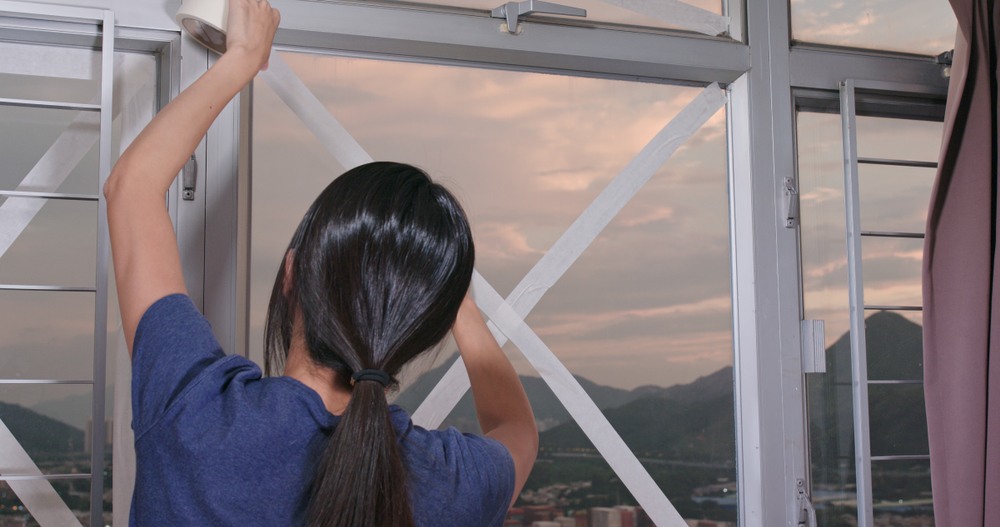
Safety and security films are engineered to hold small fragments together in an ordinary breakage event. They are not tested for large missile impact or design wind pressure, and they will not earn opening protection credit on a wind mitigation inspection. Tape does even less — it doesn’t strengthen glass, it just changes the size of the shards.
Plywood is a real fallback when nothing else is in place. But it has to be the right thickness, cut to the right overlap, and anchored into structure rather than screwed into stucco the morning of. If plywood is your current plan, it’s worth being honest about whether you’d actually be able to execute it under a 48-hour warning.
Myth 8: “Impact windows only matter during a hurricane”
The truth: The storm is the reason they exist, but it’s not where most of the value accumulates.
Between storms, impact windows and doors are quietly doing four other things: cutting exterior noise, blocking UV that fades flooring and furniture, improving the thermal envelope so the AC cycles less in a Florida August, and making forced entry considerably harder. They also tend to help at resale, because a buyer’s insurance quote is part of their affordability math now in a way it wasn’t a decade ago.
And there’s a 2026-specific wrinkle worth knowing: Florida’s tax package signed in June 2026 created a sales tax refund of up to $500 per residence on qualifying impact-rated windows, exterior doors, and garage doors, for homesteaded properties with a just value of $700,000 or less. It’s a refund you apply for through the Florida Department of Revenue, not an automatic discount at purchase — so keep your contract, invoices, product approval documents, and permit records. Confirm current requirements with the Department before you file.
Quick Reference: What Counts and What Doesn’t
| Claim | Counts as opening protection? | What inspectors verify |
|---|---|---|
| Impact-rated windows | Yes | Permanent glass etching + NOA or FL# |
| Impact-rated doors and sliders | Yes | Full system approval, not just the slab |
| Code-compliant shutters | Yes | Product approval + coverage of all openings |
| Wind-rated garage door | Yes | Approval documentation + anchoring |
| Double-pane windows | No | No impact rating exists |
| Security or screen doors | No | Burglary rating, not wind rating |
| Safety or security window film | No | Not tested for large missile impact |
| Tape or unanchored plywood | No | No product approval |
How the Hurricane Safety Program Fits In
Most of the myths above share a root cause: the gap between installing something and documenting it correctly. That’s the part we built the program around.
The Hurricane Safety Program works with Florida homeowners across Miami-Dade, Broward, Palm Beach, and the Tampa Bay area to replace roofs, windows, and doors with products that meet current Florida Building Code and carry the product approvals your inspector and your carrier will actually ask for. We handle the inspection, permitting, product selection, installation, and final documentation — including making sure your updated wind mitigation report reflects the work so the credits you paid for can be applied at renewal.
Financing is structured at $0 upfront with no payments until November 2026, which is what makes it realistic to protect every opening at once rather than phasing a project and waiting years for the credit to land.
One note on grants: My Safe Florida Home offers matching grants up to $10,000, and the 2026 state budget reappropriated funding aimed at the roughly 45,000 homeowners still sitting in the inspection backlog. It’s a genuinely good program if you qualify — but eligibility is income-restricted, prioritized by age and income group, and timing depends on where you land in the queue. For homeowners who need to move before the next renewal or the next storm, HSP is the path that doesn’t require waiting for an appropriation.
Find Out Where Your Home Actually Stands
You don’t need to guess whether your windows are impact-rated, whether your credits are being applied, or which opening is holding back the rest. A short qualification review answers all three.
Check If Your Home Qualifies →
Or call us directly at (888) 369-4536.