
The Season Has Been Quiet. That Is History, Not a Forecast.
If you have been watching the tropics this summer and wondering where the storms are, you are not imagining it. As of early September 2026, the National Hurricane Center lists no active tropical cyclones anywhere in the Atlantic basin. Five systems have formed since June, and every one of them stayed a tropical storm. Bertha, the strongest of the group, topped out near 60 mph in late July.
The numbers behind the season are just as lopsided. Accumulated Cyclone Energy, the index forecasters use to measure how much storm activity a season has actually produced, sits near 3.6 units. A normal season by this point runs many times higher. In August, NOAA lowered its outlook again to 7 to 13 named storms, 2 to 6 hurricanes, and 0 to 2 major hurricanes, and put the chance of an above average season below 5 percent.
So here is the honest read for a Florida homeowner: this has been a genuinely slow year, and nobody is pretending otherwise. The problem is what people do with that information. Peak hurricane season in Florida does not care what August looked like. It arrives on the same schedule every year, and the back half of the season is where Florida has historically taken its worst hits.
Why the Calendar Matters More Than the Storm Count
The climatological peak is around September 10
The Atlantic season runs June 1 through November 30, but activity is not spread evenly across those six months. The National Hurricane Center puts the climatological peak at September 10, with most activity concentrated between mid-August and mid-October. Roughly half of a typical season’s activity still lies ahead of that peak date. A season can be running far below average on Labor Day and still deliver a landfall that reshapes a neighborhood.
That is not a scare tactic. It is the reason emergency managers in Miami-Dade, Broward, and Palm Beach do not stand down in September.
Florida has been fooled by quiet peaks before
Two recent seasons are worth remembering:
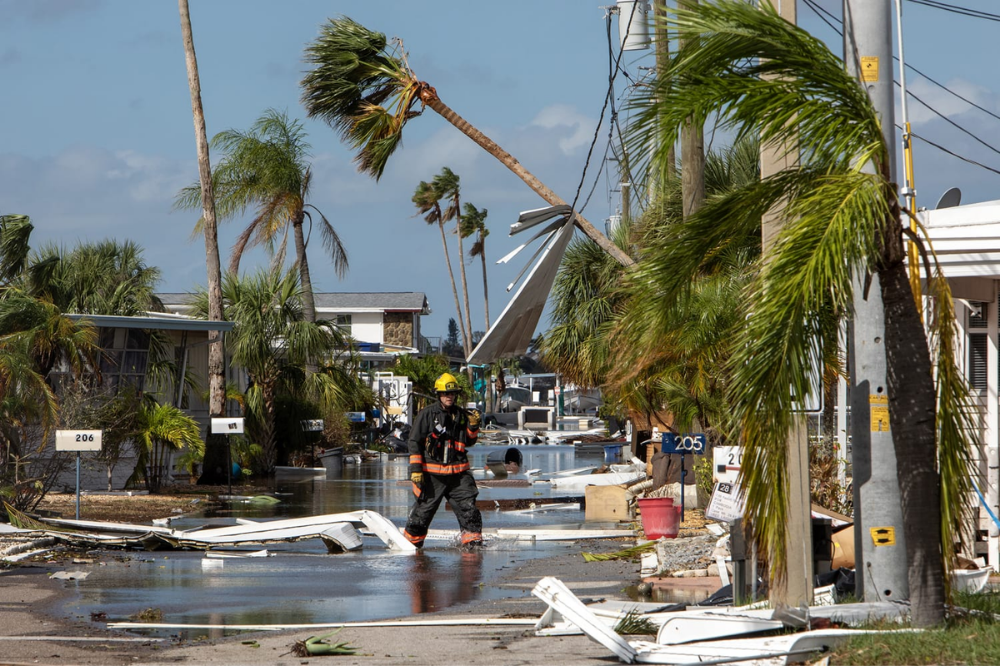
- 2022 felt strangely quiet around the seasonal peak. Then Hurricane Ian came ashore and became one of the costliest storms in Florida history.
- 2024 went through a pronounced mid-season lull, then produced Helene and Milton within weeks of each other.
In both cases, homeowners who had already completed their upgrades were finished. Homeowners who were waiting for a reason to act got one, and by then contractor schedules, permit queues, and product availability were all working against them.
What a slow season actually changes
A quiet stretch does have one real benefit, and it has nothing to do with risk. It changes the logistics. Right now, before any named system is pointed at the state:
- Permit offices in South Florida are not sitting on a post-storm backlog.
- Impact window and door lead times are normal rather than stretched.
- Inspectors and installers have open calendar slots.
- Nobody is competing with an entire county for the same crews.
Every one of those advantages disappears within days of a watch going up. The quiet period is the window to do the work, not the reason to skip it.
The Paperwork Changed This Year, and It Matters
One of the most important Florida hurricane developments of 2026 has nothing to do with the weather. On April 1, 2026, a revised version of the state’s Uniform Mitigation Verification Inspection Form, OIR-B1-1802 (Rev. 04/26), became mandatory. This is the form that documents your home’s wind resistant features so an insurer can apply mitigation credits.
What the revised form added
The updated form keeps the familiar categories and sharpens several of them, including roof covering, roof deck attachment, roof to wall attachment, secondary water resistance, and opening protection. It also adds:
- Recognition of FORTIFIED Home certifications at the Roof, Silver, and Gold levels
- A Region field tied to the design wind speed where your home sits
- A roof slope designation for single family homes with multiple slopes
The bigger change is proof, not scoring
The revision does not automatically raise or lower anyone’s credits. What it does is raise the standard of evidence. The form places heavier weight on documentation that supports each feature, meaning photographs, permits, and product approval numbers, rather than an inspector’s checkmark alone. Missing or inconsistent documentation can slow underwriting review, and it can affect whether a credit is applied at all.
Two practical points for Florida homeowners:
- An older form is still generally acceptable if it was completed within five years before April 1, 2026 and no material changes were made to the structure. You do not automatically need a new inspection.
- If your home has been re-roofed, re-glazed, or otherwise upgraded since your last inspection, that old form is no longer describing your house. The credits you may have earned are sitting unclaimed until a current inspection documents them.
That second scenario is common, and it is one of the quietest ways Florida homeowners leave money on the table.
Insurance Is Easing, but Credits Are Still Earned
The Florida property insurance market looks different than it did three years ago. For 2026, Citizens Property Insurance received approval for an average 8.8 percent decrease on homeowners multiperil policies and an average 5.5 percent decrease on wind only policies, taking effect July 1, 2026 for new business and at renewal for existing policyholders. Citizens’ own policy count has fallen to roughly 336,000, down sharply from a peak above 1.4 million in late 2023, as private carriers have re-entered the market.
That is real relief, and it is worth stating plainly rather than dressing up. But two things remain true:
- Rate relief is not the same as a credit on your policy. A statewide decrease applies broadly. Mitigation credits apply to your specific home, based on what is actually installed and documented.
- Underwriting appetite still depends on the structure. An aging roof or unprotected openings can affect what a carrier is willing to write, regardless of where average rates are heading.
We do not promise a specific dollar figure, because no honest contractor can. Credits vary by carrier, by county, by policy form, and by what your inspection documents. What we can say is that undocumented features earn nothing, and that is entirely fixable.
What Actually Reduces Damage in a Florida Storm
Priorities matter more than product brochures. In South Florida wind events, failures tend to cascade in a predictable order.
Openings come first
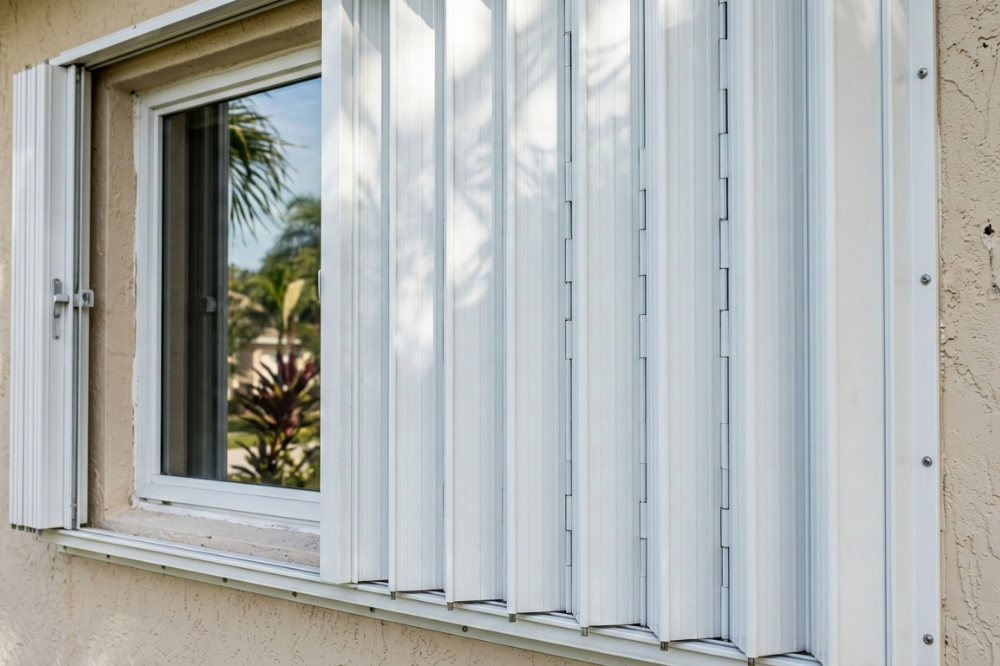
Once a window or door fails, wind enters the building envelope and pressurizes it. That internal pressure is what pushes roofs off and walls outward. Protecting openings is not a cosmetic upgrade, it is what keeps a pressure failure from becoming a structural one. That includes garage doors, which are often the largest and weakest opening on the house.
The roof system, not just the shingles
A wind resistant roof is a system: the covering, how the deck is attached, how the roof connects to the walls, and whether there is a secondary water barrier underneath. Those are also four of the categories the state mitigation form asks about by name, which is not a coincidence. They are the features that measurably change outcomes.
Documentation last, but never skipped
Work that is permitted, inspected, and documented protects you twice: once during the storm, and once during the claim or underwriting review afterward.
How the Hurricane Safety Program Handles This
The Hurricane Safety Program exists because most Florida homeowners know what they need and stall on the process, not the decision. Permits, product approvals, inspection forms, and coordinating trades is a full time job, and nobody wants a second one.
What that means in practice:
- Inspection first. We document the current condition of your roof, windows, doors, and openings, and tell you where your home actually stands.
- Permits and approvals. We pull the permits and handle the product approval documentation your county requires.
- Installation. Impact windows, impact doors, and wind resistant roofing installed by our own managed crews.
- Insurance documentation. We make sure your completed work is captured on a current wind mitigation form so your carrier can evaluate the credits you have earned.
- Financing. Financing is available with no upfront cost, so the timing of the work is not dictated by what is in your account this month.
We handle the entire process. You approve the scope and we run the rest.
Do the Work While the Tropics Are Quiet
A slow season is not protection. It is scheduling room. Peak hurricane season in Florida is here, roughly half of a typical season’s activity still lies ahead on the calendar, and the state’s mitigation paperwork now demands better documentation than it did last year. All three of those facts point the same direction: this is the month to get your home assessed and your upgrades scheduled.
Find out where your home stands and what it qualifies for. There is no cost for the assessment.
Check If Your Home Qualifies →
Or call us directly at (888) 369-4536 to speak with our team.