A new Florida law took effect on July 1, 2026, and it has been badly misread. House Bill 803 created a building permit exemption for certain single-family residential work valued under $7,500. Within weeks, building departments across the state began issuing corrections, because homeowners and some contractors had started treating the Florida $7,500 permit exemption as a blanket pass on permitting.
It is not. The exemption is narrow, it is conditional, and it specifically does not cover the work most South Florida homeowners are actually doing right now: roofs, windows, and exterior doors.
That distinction matters more than it sounds. Unpermitted work on your roof or your openings does not just create a code problem. It quietly removes your ability to claim the insurance credits those upgrades were supposed to earn, and it can surface years later when you sell the home or file a claim.
Here is what the law actually says, what still requires a permit, and what to do if you already have an open or unpermitted job on your property.
What HB 803 Actually Changed
HB 803 was signed in May 2026 and took effect July 1. The core provision requires local governments that issue building permits to exempt the owner of a single-family dwelling, or that owner’s contractor, from obtaining a permit for work valued at less than $7,500 on the owner’s property.
The intent was reasonable: cut delay and cost out of small home improvement projects that were clogging permit queues. But three conditions are attached, and they get dropped every time the law gets summarized on social media.
The exemption is not automatic. The law still requires a written request for exemption to be submitted. In Miami-Dade, homeowners or contractors must file that request, document the scope and value of the work, wait for county review, and receive approval from the building department before work starts. Without that approval, the work can still be treated as unpermitted.
The project cannot be split. A staff analysis of the bill notes that projects may not be divided into smaller pieces to get under the threshold. Splitting a $14,000 window package into two $7,000 contracts is not a workaround. It is an enforcement problem.
Whole categories of work are carved out. Local governments can still require a permit for electrical, plumbing, mechanical, gas, or structural work regardless of the appraised value. Some counties have added their own clarifications. Seminole County, for example, also excludes projects located partially or entirely within a flood hazard area.
The Work That Still Requires a Permit
This is the part homeowners need in plain language. Several Florida building departments have published explicit lists, and they line up.
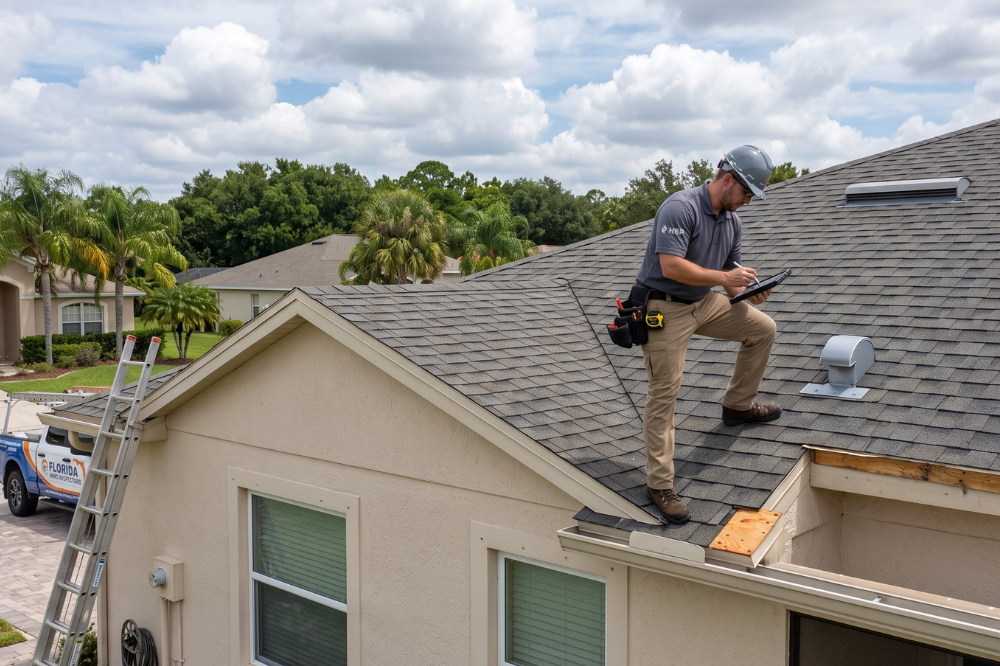
Santa Rosa County stated directly that the exemption does not apply to roof replacements, window replacements, exterior door replacements, siding installation or replacement, or other work affecting the building envelope or structural integrity. The county issued that notice specifically because inaccurate claims were circulating that all residential projects under $7,500 were exempt.
So for a typical South Florida home, here is where you stand:
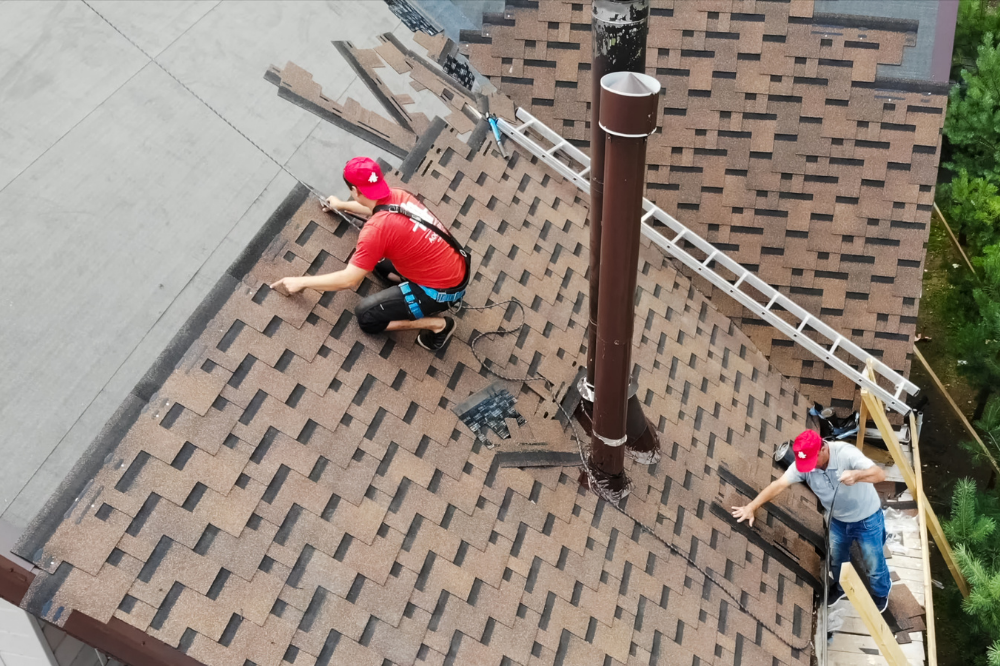
- Roof replacement: permit required
- Roof repair that affects the deck or structure: permit required
- Impact window replacement: permit required
- Exterior and sliding glass door replacement: permit required
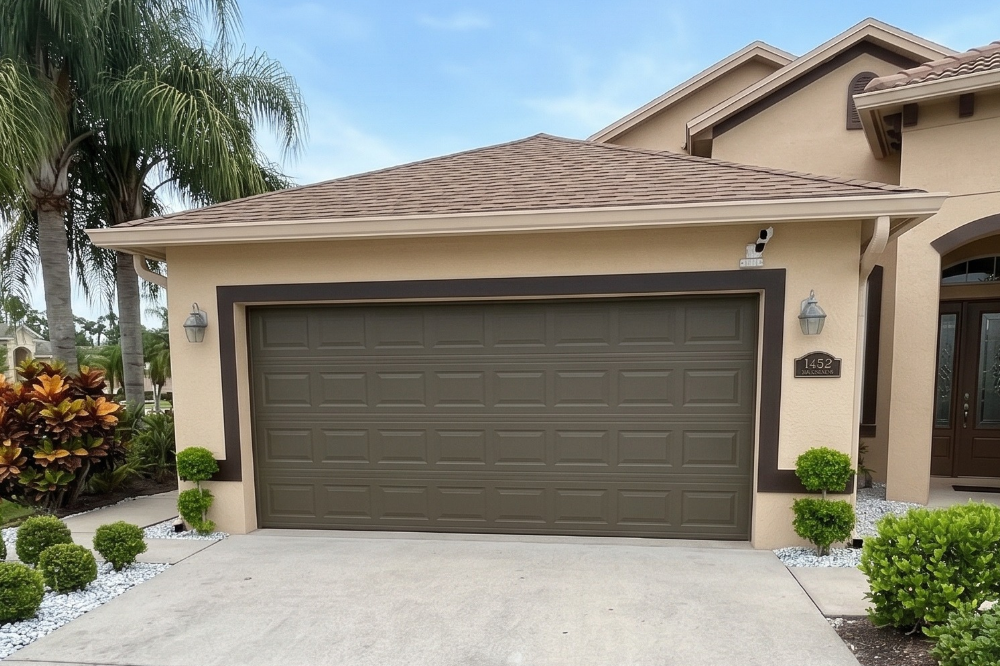
- Garage door replacement: permit required
- Hurricane shutter installation: permit required
- Electrical, plumbing, mechanical, or gas work: permit required at any value
What may actually qualify under the exemption is closer to interior painting, drywall replacement, flooring or tile that does not involve a shower pan, cabinet replacement with no plumbing or electrical involved, and fence installation. Useful, but not the category of work that hardens a home or moves an insurance premium.
If the upgrade is meant to protect your home from wind, it needs a permit. There is no version of the new law where that changes.
Why Unpermitted Openings Cost You the Insurance Credit
Here is the connection most homeowners miss.
Florida’s wind mitigation credit system runs on documentation. A licensed inspector completes Form OIR-B1-1802, and your carrier applies credits based on what the inspector was able to verify: roof covering and its code compliance, roof deck attachment, roof-to-wall connection, roof geometry, secondary water resistance, and opening protection.
Every one of those line items depends on evidence. Product approval numbers. Installation method. And permit records showing the work was inspected and signed off by the local building department.
When work is unpermitted, the inspector has no verified installation to point to. Impact-rated glass with no permit history often gets treated the same as standard glass, because the carrier has no way to confirm the product was installed to its approval conditions. The physical protection exists. The credit does not.
The dollars involved are not small. A wind mitigation inspection generally runs $100 to $150 and can cut 20 to 45 percent off the windstorm portion of a premium, and Florida Office of Insurance Regulation data puts county averages at roughly $6,023 in Miami-Dade, $6,220 in Broward, and $6,412 in Palm Beach. In Tri-County, the windstorm share is a large portion of the bill. Losing a credit tier on a technicality is a four-figure annual mistake.
It is worth noting that the broader market has actually improved. Citizens Property Insurance received approval for statewide rate decreases in 2026, averaging 8.8 percent on multiperil policies and 5.5 percent on wind-only, with all personal lines policyholders receiving at least a 2 percent reduction. That easing is real. It also does not reach a home whose upgrades cannot be documented.
The Longer Tail: Selling, Claims, and Code Enforcement
Unpermitted work does not stay buried. It tends to surface at the worst possible moment.
At closing. Title companies routinely require open, expired, or abandoned permits to be resolved before a property changes hands. Unresolved permits have become a recurring cause of stalled or collapsed Florida transactions. A buyer’s inspection that turns up newer windows with no matching permit record raises an immediate question about who pays to fix the paper trail.
At claim time. If storm damage involves a component that was replaced without a permit, expect the carrier to ask for documentation you do not have. That does not automatically void a claim, but it gives an adjuster a legitimate reason to dispute scope and workmanship.
At renewal. Carriers reinspect. A home whose wind mitigation report cannot support its claimed credits can see those credits removed at the next cycle, which shows up as a premium increase without any change to the house itself.
Already Have an Open or Expired Permit? There Is a Path
Plenty of South Florida homes carry an open permit from work a previous owner contracted years ago. Florida law provides several routes to close one, and most homeowners do not know they exist.
Under Florida Statute 553.79:
- The property owner may close a permit using either the original contractor listed on it or a different appropriately licensed Florida contractor. A replacement contractor is not liable for defects in the original contractor’s work and is responsible only for what they perform themselves.
- The owner may also take on the role of owner-builder to satisfy the permit’s conditions.
- If a permit has expired and its requirements were substantially completed, it may be closed without pulling a new permit, and any remaining work can be done under the building code in effect when the original permit was issued.
- A local enforcement agency may close a permit six years after issuance even without a final inspection, if it determines no apparent safety hazards exist.
- An arm’s-length purchaser cannot be fined, penalized, or denied a permit solely because a previous owner left a permit open.
There is also a path involving a Florida-registered architect or engineer, who can visually inspect accessible areas, certify compliance with the code in effect when the permit was issued, and submit an affidavit inspection report. That route matters when the work is concealed behind finished walls and direct inspection is no longer possible.
The practical first step is simply to look. Miami-Dade, Broward, and Palm Beach counties all publish permit search tools, and municipal building departments maintain their own records. Pull your address history before you schedule a wind mitigation inspection, not after.
How the Hurricane Safety Program Handles This
The Hurricane Safety Program exists because the gap between “my home is protected” and “my insurer credits my home as protected” is where most Florida homeowners lose money.
Every upgrade coordinated through the program is fully permitted through the local building department and inspected to close. That is not a selling point, it is the baseline requirement for the work to count.
What the program covers:
- Roof replacement built to current Florida Building Code, including High Velocity Hurricane Zone requirements in Miami-Dade and Broward, with attention to deck attachment, roof-to-wall connection, and secondary water resistance
- Impact windows and doors using Florida Product Approved and Miami-Dade NOA-rated systems, so opening protection can actually be verified on the mitigation form
- Permit handling start to finish, including application, plan review coordination, inspection scheduling, and closeout
- Wind mitigation and 4-point inspection coordination after installation, so the documentation reaches your carrier in usable form
- Financing with no upfront cost, so a homeowner is not choosing between a compliant job and an affordable one
The Short Version
The $7,500 exemption is real, but it is a small-projects rule wearing a big headline. If you are replacing a roof, windows, or exterior doors in Florida, you need a permit, and you need it closed. Anything less and the upgrade protects your house without protecting your premium.
If you are not sure what is on file for your address, that is the place to start.
Check If Your Home Qualifies →
Or call (888) 369-4536 to speak with a program representative about your roof, windows, doors, and permit history.